
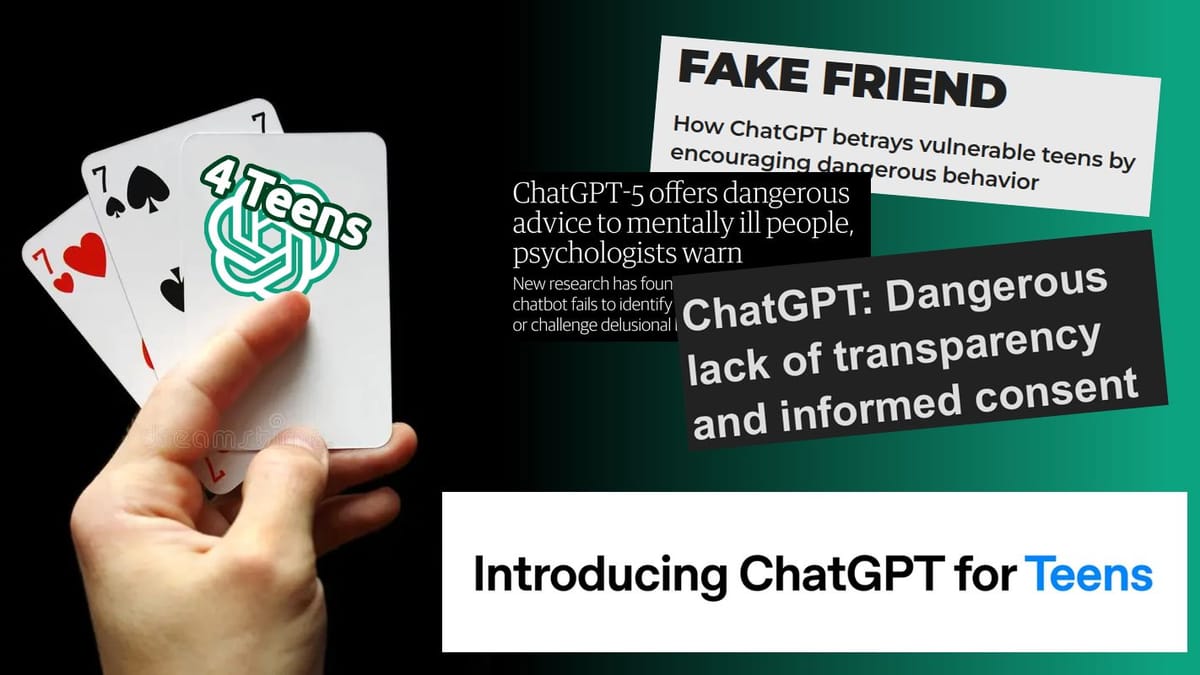
So OpenAI is introducing a new ChatGPT model called ChatGPT for Teens. Given everything that has happened since generative AI went mainstream, the wide push for age verification and the growing privacy concerns online, this is just extremely tone-deaf.
I suppose OpenAI is being accused of not taking the protection of children seriously enough, so their solution is to not solve it, but to make it look like they did. They are operating a service that's potentially dangerous to young and old alike. This is not really an issue where you can just slap a "Kids" logo on it, and pretend like it's not a problem anymore. The new model is supposed to avoid having emotions and avoid forming strong connections, but this is about as effective as YouTube for Kids or Australia's and France's attempt at blocking social networks to children below a certain age. Creating a separate teen model doesn’t guarantee teens will use it, nor does it stop them from doing whatever it takes to access the "adult" version, which will, no doubt, get even worse now that it's "separated". Besides, this isn't even an industry standard sort of thing, so anyone can just migrate to a different provider anyway. This is all just very concerning and worth questioning.
Here's the deal: OpenAI is the operator and creator of this service. It's their responsibility to build it and keep it safe. If they can't do that, they shouldn't offer it at all. This is not a situation where you just create a sidecar "safe" model and throw all the responsibility onto parents and governments. That's as if you built a shooting range in the middle of the street, and once people complained that stray bullets have hit people, you simply marked a dirt path around it and called it safe. We need to point out the real problem and hold the people behind it responsible.
If you can’t operate a safe public service, you shouldn’t operate it at all. You shouldn't be allowed to unless you can prove it's reasonably safe for the public. You can create a locked, paid version or make it B2B if you want. But if you have reports of people going psychotic [1], delusional and even suicidal [3,4] because of your service, then that's not a safe and well tested product. This is not a small handful of people either. By OpenAI's own statistics, this is about 0.07% of their users. Sounds small until you realize they also report over 800 million weekly users, so that's about half a million of people that experience symptoms of psychosis.[2] Make no mistake: what OpenAI is doing here is deflecting blame by introducing a rough patch and saying "look, your kid got hurt because they weren't using the Teen version, so it's not our fault!", but it is. It really is...
This would be illegal or closely regulated in any other industry, so why not in tech? Money is the bottom line and the price of human life and sanity is simply too low. OpenAI's best is simply not enough; they have no real control over this thing. Their Safety tests are rubbish because our understanding of black box deep neural nets is rubbish. The only way to fight back is to not engage. Avoid using OpenAI or any other generative AI provider. Instead start using your own head, hone your own skills, focus and patience, and if you want or need to speed up your workflow with generative AI, look into running your own local models [5] instead of paying for overpriced and dangerous services that will only get more expensive.
Sources:
- The Emerging Problem of "AI Psychosis"
- Characterizing the spiral: potential mechanisms in AI-associated delusions
- Their teenage sons died by suicide. Now, they are sounding an alarm about AI chatbots
- 'A predator in your home': Mothers say chatbots encouraged their sons to kill themselves
- Ollama Download